


Philippines Pre-Arrival Information for Travelers
Most visitors enter the Philippines visa-free, but a few things need doing before you fly. This guide covers what to check as of October 2026: entry rules and eTravel, Manila airport terminals, domestic flights, island groups, seasons, money, phones and health.
Entry rules and visas
Nationals of 157 countries can enter the Philippines without a visa for tourism or business. To qualify, your passport must be valid for at least six months beyond your planned stay, and you need a return ticket or an onward ticket to your next destination.
| Passport | Visa-free stay | Notes |
|---|---|---|
| United States, Canada, United Kingdom, all EU countries, Australia, New Zealand, Japan, South Korea, Singapore | 30 days | Can be extended in the Philippines |
| Brazil and other bilateral-agreement passports | 59 days | Under bilateral agreements |
| India | 14 days | Not extendable. 30 days, also not extendable, with a valid US, Japanese, Australian, Canadian, Schengen, Singapore or UK visa or residence permit |
| China (mainland) | 14 days | Since 16 January 2026, for one year subject to review. Not extendable. Entry via Manila (NAIA) or Mactan-Cebu only, with a confirmed hotel booking |
| Other nationalities | Visa required | Apply at a Philippine embassy or consulate, or through the official eVisa system where available |
Visitors admitted for 30 days can extend their stay at a Bureau of Immigration office before it expires. The first extension is a 29-day visa waiver, which brings the total to 59 days.
Check before you book
Entry rules change. Confirm the rule for your passport with the Department of Foreign Affairs or the nearest Philippine embassy before you buy flights.
eTravel: register before you fly
All arriving passengers must register on eTravel, the government’s online travel declaration. It is free and works in any phone or computer browser.
- Register within 72 hours before your arrival, only on the official site etravel.gov.ph. Sites that ask for payment are not official.
- Save a screenshot or printout of your QR code. Airline staff check it before boarding.
- Foreign visitors do not register again for departure. That requirement applies to departing Filipino passengers.
Arriving in Manila: NAIA terminals in 2026
Ninoy Aquino International Airport (NAIA) has three passenger terminals in separate buildings. Several airlines moved terminals on 29 March and 1 April 2026, so check the terminal on your ticket. As of October 2026:
| Terminal | Flights | Main airlines |
|---|---|---|
| Terminal 1 | International | Philippine Airlines and AirAsia (international flights) and many foreign airlines |
| Terminal 2 | Domestic only | Philippine Airlines, PAL Express and AirAsia Philippines (domestic flights) |
| Terminal 3 | International and domestic | Cebu Pacific (international and domestic) and many foreign airlines, including Japan Airlines, Air China, China Eastern and Vietnam Airlines, which moved here from Terminal 1 in March and April 2026 |
The terminals are separate buildings with no airside connection, so changing terminals means going landside and riding to the next one, and Manila traffic can stretch a short transfer. The airport runs a free 24/7 inter-terminal shuttle between Terminals 1, 2 and 3 for passengers with a boarding pass or confirmed booking, and Philippine Airlines runs its own free shuttle between Terminals 1 and 2 for connecting passengers.
International to domestic on separate tickets?
If you arrive on an international flight and connect to a domestic flight booked on a separate ticket, allow at least four hours in Manila. You will collect your bags, clear customs, change terminals and check in again.
Domestic flights and Clark airport
Flying is the fastest way between island groups. The main domestic airlines are Philippine Airlines (with PAL Express), Cebu Pacific (with Cebgo) and AirAsia Philippines. AirSWIFT, a Cebu Pacific subsidiary, serves El Nido.
New in 2026: some flights now leave from Clark
Since 29 March 2026, turboprop flights no longer operate from NAIA. They moved to Clark International Airport in Pampanga, north of Manila, including many flights to El Nido, Coron and Siargao. Check the departure airport on your ticket and plan the road transfer from Manila.
For trips focused on the Visayas, flying into Mactan-Cebu International Airport can save a connection in Manila. Ferries and fast craft link some nearby islands, but schedules depend on the weather.
Island groups and main destinations
The Philippines has 7,641 islands, according to the national mapping agency NAMRIA, grouped into Luzon in the north, the Visayas in the center and Mindanao in the south.
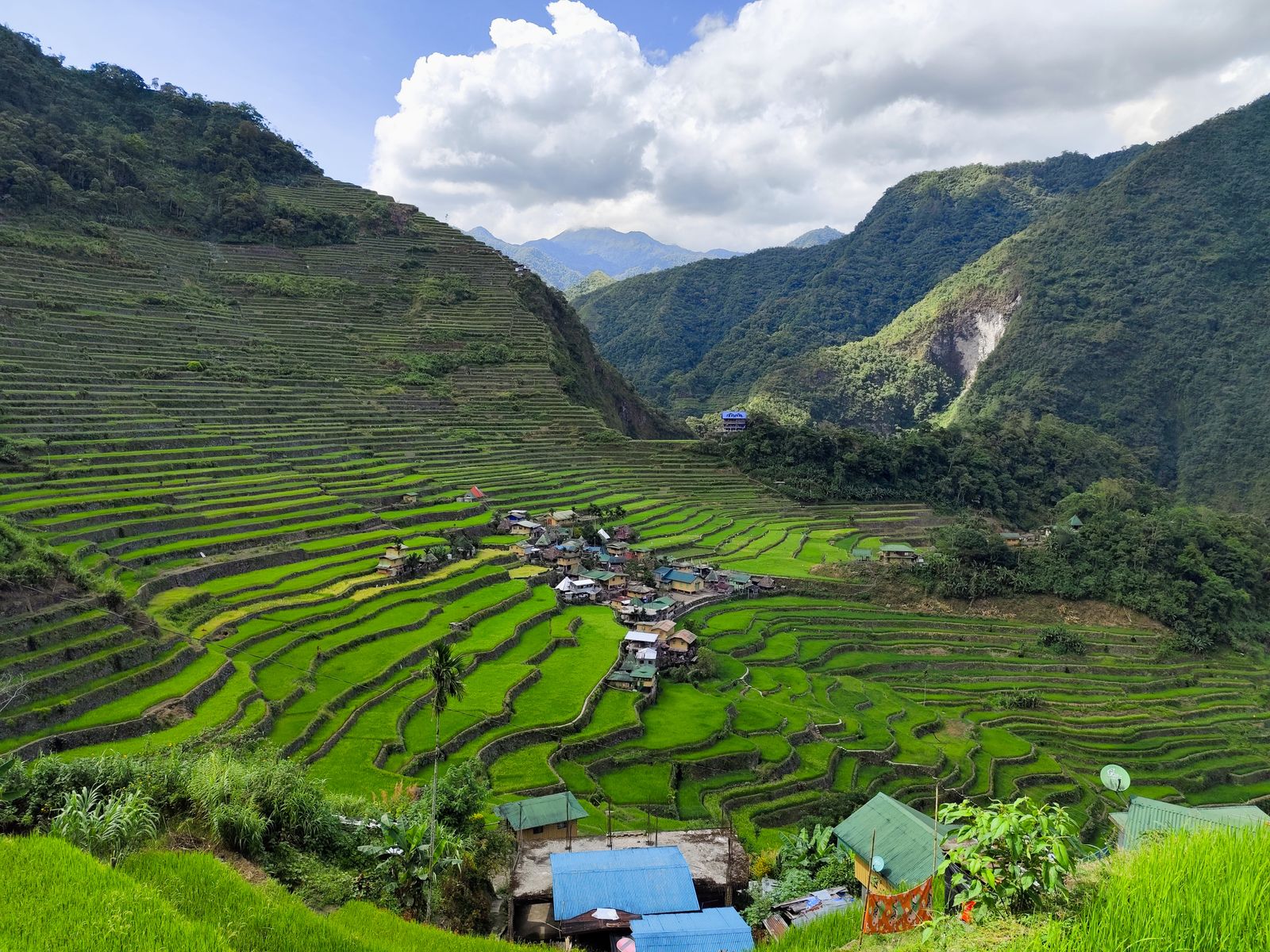
| Area | Highlights | Our guides |
|---|---|---|
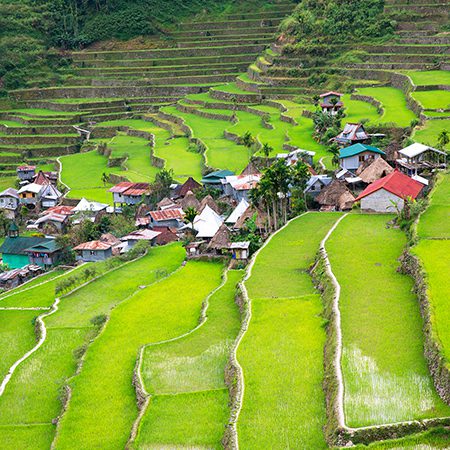
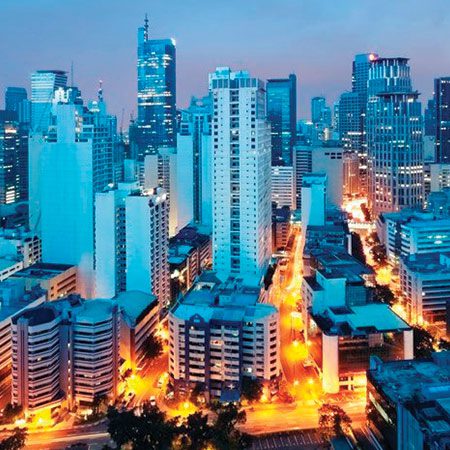
| Luzon | Manila, Intramuros and Binondo; the Rice Terraces of the Philippine Cordilleras around Banaue and Batad; the Historic City of Vigan; Tagaytay and the Taal Volcano area | Manila, Banaue, Vigan, Binondo food walk |
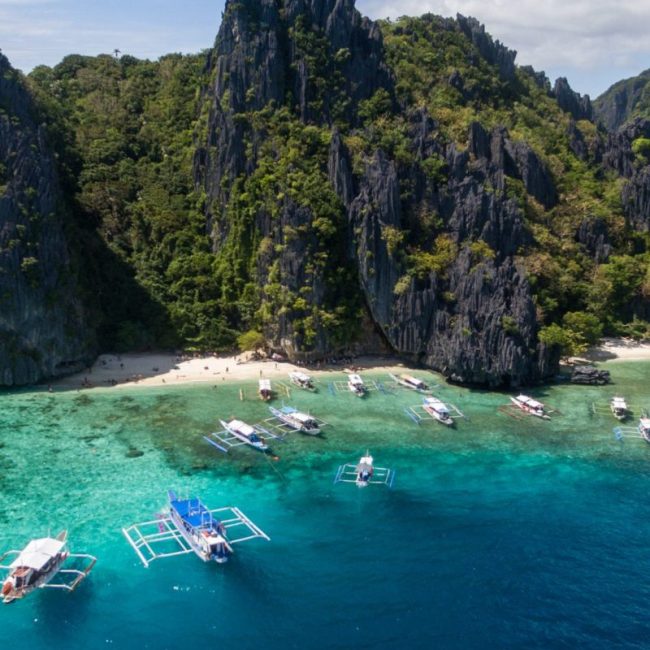
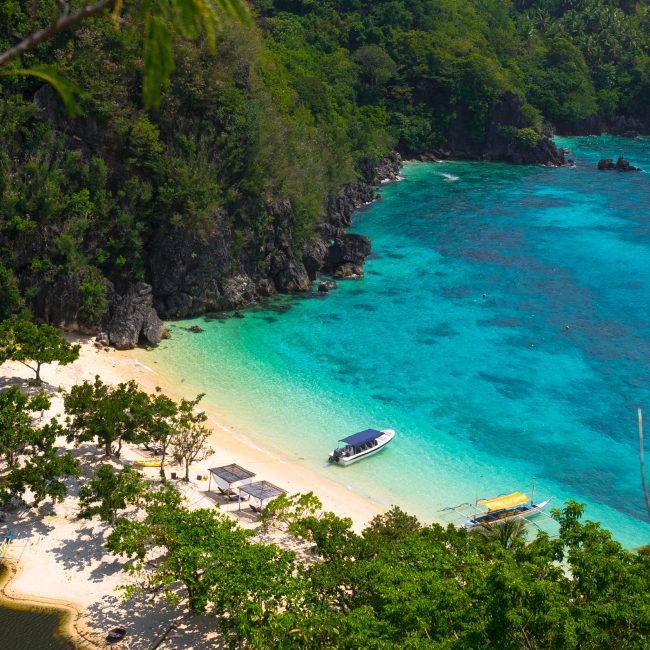
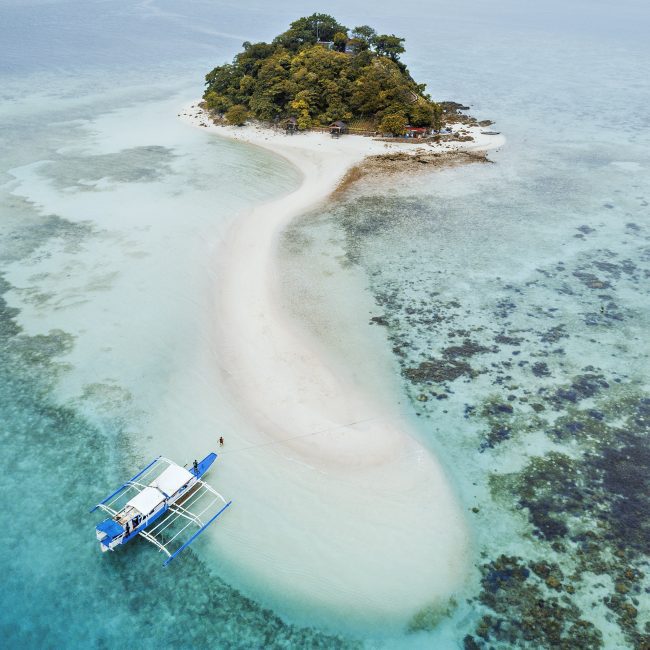
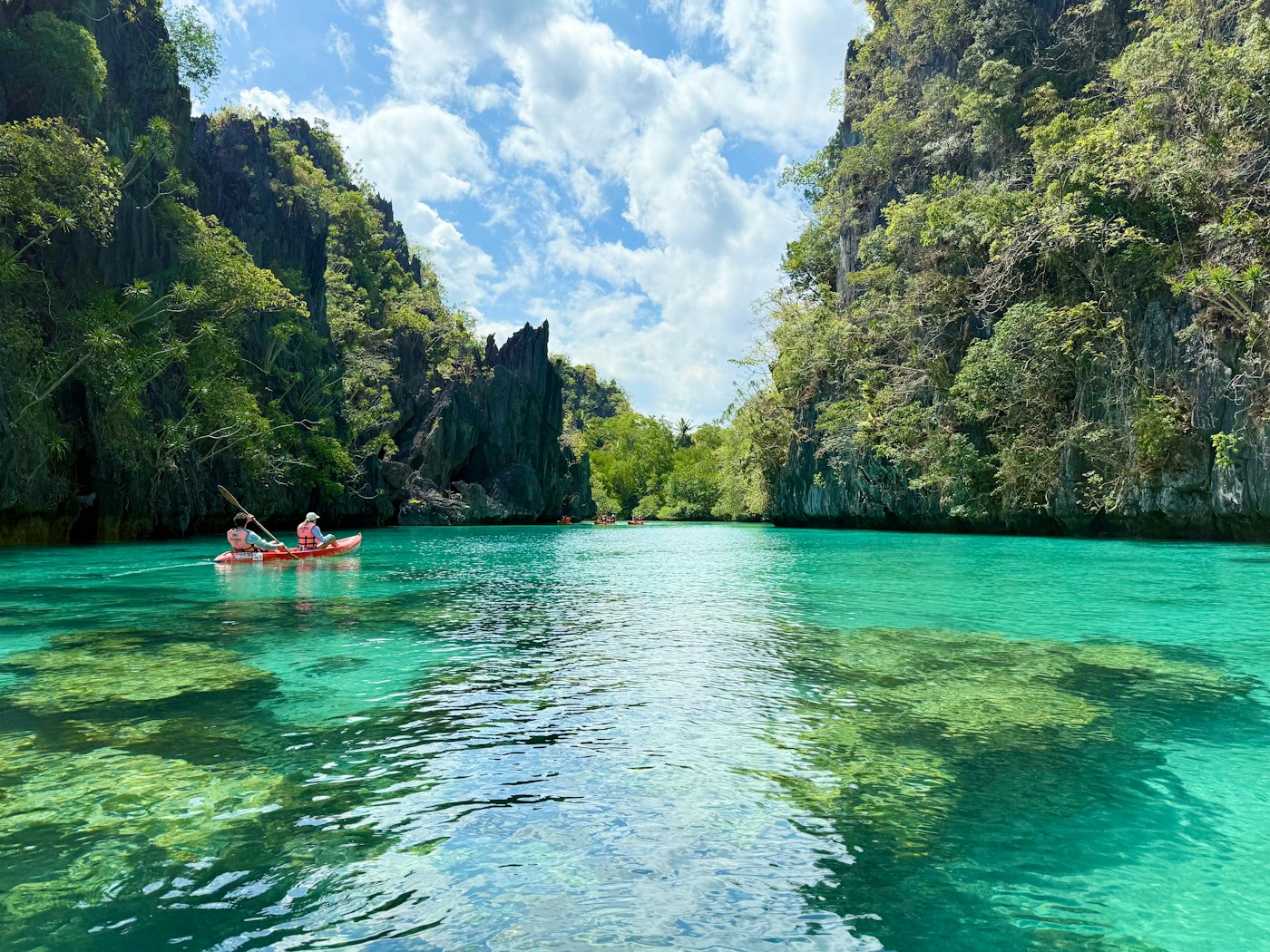
| Palawan (Luzon group) | El Nido and Coron for limestone islands and lagoons; the Puerto-Princesa Subterranean River National Park | El Nido, Coron, Palawan |
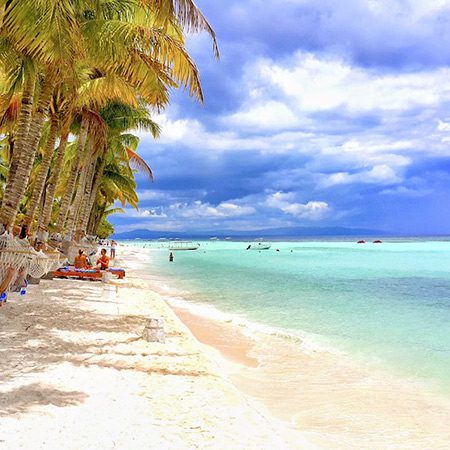
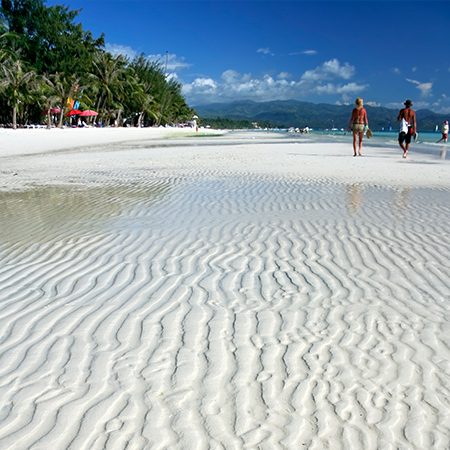
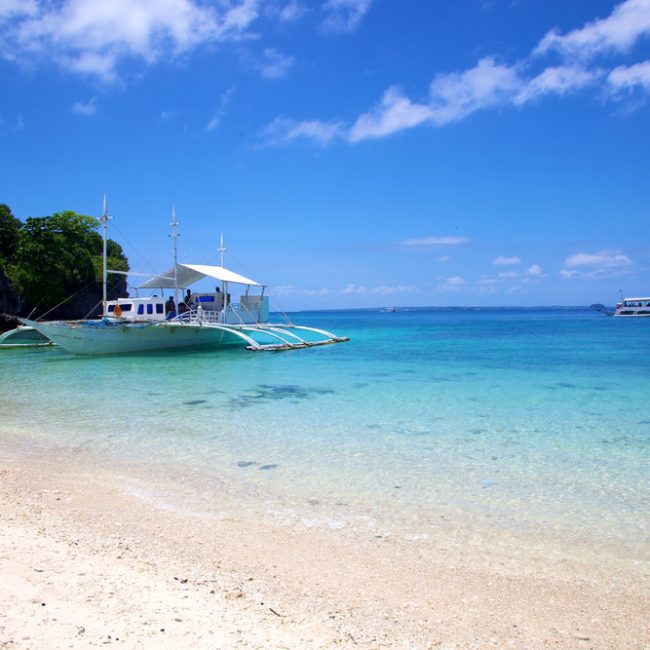
| Visayas | Boracay, Cebu, Bohol and its Chocolate Hills, Siquijor, Negros | Boracay, Cebu, Bohol |
| Mindanao | Siargao for surfing and island hopping, Camiguin, Davao | Siargao, Camiguin, Mindanao |
The rice terraces, Vigan and the Puerto-Princesa Subterranean River are all UNESCO World Heritage sites. Explore all destinations for ideas by region.
Climate and when to go
The climate is tropical and maritime, with high temperatures, high humidity and plenty of rain. The national weather service, PAGASA, divides the year into two main seasons.
| Season | Months | What to expect |
|---|---|---|
| Cool dry season | December to February | The most comfortable months for touring and beaches. January is the coolest month. |
| Hot dry season | March to May | Still prime beach and island-hopping time, but hot and humid, peaking in May. |
| Rainy season | June to November | Showers and storms. Typhoon activity peaks from July to October, and flights and ferries can be canceled. |
Christmas to New Year and Holy Week are the busiest local travel periods, so book early for those dates.
Money, cards and ATMs
- The currency is the Philippine peso (PHP, ₱).
- Cards and ATMs are easy to use in major cities such as Manila and Cebu. Cash is still essential in smaller towns, markets and on the islands.
- Withdraw enough cash before heading to smaller islands, and check your bank’s foreign withdrawal fees before you travel.
- The local mobile wallet GCash is increasingly popular, but keep cash for remote areas.
For typical tip amounts, see our guide How Much to Tip in the Philippines.
Phone, SIM and eSIM
Every SIM and eSIM in the Philippines must be registered before it works. Tourists register with their passport, proof of address in the Philippines such as a hotel booking, and a return or onward ticket. A SIM registered to a tourist is valid for 30 days.
Globe and Smart sell tourist SIMs and eSIMs at the main international airports, and Globe’s Traveler eSIM can be installed before you fly and registered after landing. Coverage is good in cities and patchier in rural areas and on remote islands.
Power plugs
The Philippines runs on 230 volts at 60 Hz. Sockets take type A and B plugs (flat blades) and type C plugs (round pins), and many accept both. Most phone and laptop chargers are rated 100 to 240 V and only need an adapter. Devices rated for 110 to 120 V only, common in North America, need a voltage converter.
Health and insurance
See a travel clinic at least a month before departure. Recommendations change, and your doctor will advise based on your route and activities.
- Vaccines: make sure routine vaccines are up to date. The US CDC recommends typhoid vaccine for most travelers, and hepatitis A and hepatitis B vaccines for unvaccinated travelers.
- Mosquitoes: dengue is present, so use repellent. Malaria risk exists in Palawan province and the Mindanao island group, but not in Metro Manila or other urban areas. Ask your doctor whether you need preventive medication.
- Yellow fever: a vaccination certificate is required only if you arrive from, or transit for more than 12 hours through, a country with yellow fever risk.
- Animals and water: avoid stray dogs and cats because of rabies, and avoid wading in floodwater.
Major hospitals are in Metro Manila and other large cities. Trauma care is limited outside urban areas, so take out travel insurance that includes medical evacuation.
Frequently asked questions
Do I need a visa for the Philippines?
Nationals of 157 countries can enter visa-free, most for 30 days, some for 59 days under bilateral agreements. You need a passport valid for six months beyond your stay and a return or onward ticket. Indian and mainland Chinese nationals get 14 days under specific conditions, and others need a visa.
When should I register on eTravel?
Within 72 hours before your arrival, on etravel.gov.ph. It is free. Keep the QR code, because the airline checks it before boarding.
Which NAIA terminal does my airline use?
As of October 2026: Terminal 1 for Philippine Airlines and AirAsia international flights and many foreign airlines, Terminal 2 for Philippine Airlines and AirAsia domestic flights, and Terminal 3 for Cebu Pacific and many foreign airlines. Always confirm the terminal on your ticket.
When should I visit the Philippines?
The dry season, from December to May, is best for beaches and island hopping. June to November is the rainy season, with typhoon activity peaking from July to October.
Can I use my phone in the Philippines?
Yes. Buy a tourist SIM or eSIM from Globe or Smart and register it with your passport. Tourist SIMs are valid for 30 days.
What plug type does the Philippines use?
The Philippines uses 230 V, 60 Hz power with plug types A, B and C. Many hotels have multi-standard sockets, but bring a universal adapter to be safe. Check that chargers and devices support 230 V before plugging in; most phone and laptop chargers do, while some hair tools may not.
Should I bring cash or cards to the Philippines?
Bring both. Cards work in many city hotels, malls and resorts, but smaller islands, markets, tricycles and tips often need cash in Philippine pesos (PHP). ATMs are common in cities but less reliable on small islands, so withdraw enough before you travel there and keep smaller notes handy.
Which currency should I bring?
Bring a widely exchanged currency such as US dollars or euros, or use ATMs to withdraw Philippine pesos (PHP) on arrival. Exchange at banks or licensed money changers rather than on the street. Carry smaller peso notes for rural areas, tips and short rides, where change can be hard to find.
Is English spoken in the Philippines?
Yes. English is an official language of the Philippines and is widely spoken in hotels, restaurants, shops and by tour guides, alongside Filipino and many regional languages. Most signage and menus are in English, so English-speaking travellers usually find getting around straightforward, even outside the main cities.
What SIM card should tourists use in the Philippines?
The main mobile networks are Globe and Smart, and both sell tourist SIMs, with eSIM options available. Coverage is generally good in cities and main tourist areas but can be weak on remote islands. SIM registration is required, so keep your passport handy when you buy one at the airport or in town.
How much should I tip in the Philippines?
Tipping is voluntary but common in tourism. Typical amounts are PHP 200 to 500 per day for a private driver, PHP 500 to 1,000 per full day for a guide (per group), and PHP 200 to 500 per guest for a boat crew. Restaurants: about 10% if no service charge. See our tipping guide.
What environmental and terminal fees apply?
Some destinations charge local fees, such as environmental fees in El Nido and Boracay and terminal fees at ports and airports. On Tourismo Filipino packages, all terminal and environmental fees are included. The rare exception is a small terminal where we have no access to prepay, and we tell you in advance.
Plan with a Manila-based team
Plan your Philippines trip with us
Tourismo Filipino is a Manila-based DMC planning private trips across the Philippines. Guides in English, Spanish, French, Chinese, Japanese and more on request. 24/7 support while you travel. We usually reply within the day.
Plan my tripCall +63-917-175-6678
Or email [email protected]
Travel agencies and tour operators: white-label FIT and group ground handling at net rates. Request a proposal