
Western Visayas
Boracay Private Tours and Packages
White Beach for families: Station 1 and Station 3 calm, Puka for quiet sand.
Start here
Boracay for families and quiet stations
Station 1 and Station 3 calm bases · Puka for quiet sand · Station 2 honest, not the hero.
Boracay is the beach finale many private Philippines trips build toward: powder-white sand, short hops from Manila, and enough restaurant and water-sport choice that a long weekend or a five-night unwind both work. It sits in the Western Visayas, off the northwest tip of Panay. Flight time from Manila is roughly 80 minutes into a mainland airport, then a short land transfer and boat crossing onto the island.
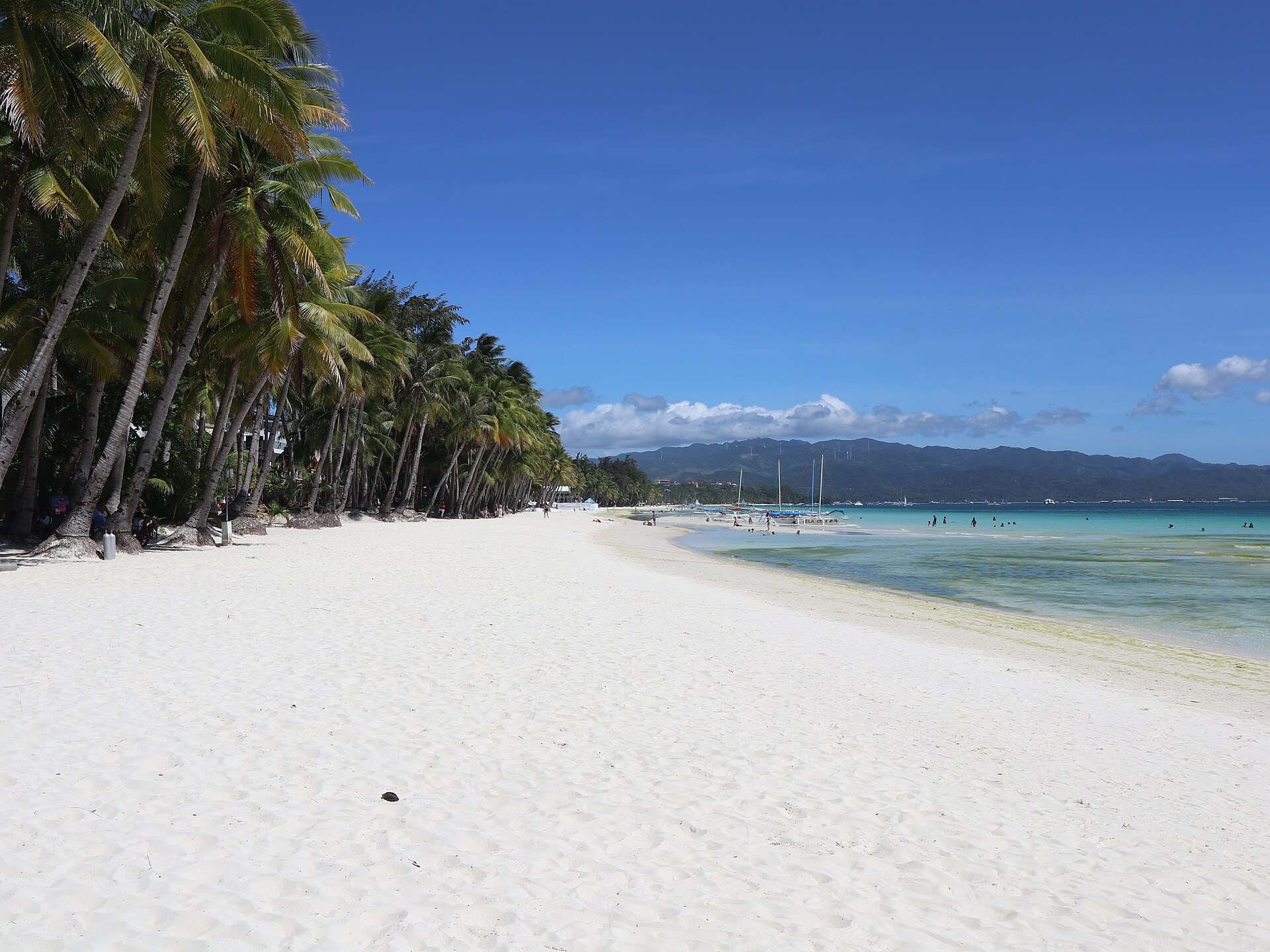
White Beach is the famous stretch (pale, fine sand, about four kilometres of shoreline), not "golden" sand. The island is busier than a silent hideaway, and Station 2 still carries bars, D'Mall, and late evenings. For family trips and quieter couples, we usually base at Station 1 or Station 3, or day-trip to Puka Beach (Yapak) when you want coarser shell sand and more space. Station 2 is also where Boracay's nightlife lives: beach bars, clubs, live music, fire-dance shows, and a long run of restaurants from casual sand dining to louder celebration nights. Quiet bases and nightlife can share one trip; you choose the mix.
Typical stay: 3-5 nights as a beach block after Manila, El Nido, or Bohol, or as a stand-alone beach week. November to May is the more reliable window for beach days and boat add-ons. Tourismo Filipino is a DOT-accredited Philippines DMC (operating since 2010). Hotels and activities below are package components, not sold as stand-alone hotel retail on this page.
Name note: It is Boracay, not "Borah." Bora Bora is a different island in French Polynesia. Award lists come and go; we treat that as background, not a slogan.
Who it is for · typical stay
Families and quieter couples · usually 3-5 nights on White Beach (Station 1 or 3) · Puka as a quiet-sand day · Station 2 for a planned evening if you want it · pair with Manila, El Nido / Coron, or Bohol when the wider route allows.
Essentials
Good to know
- Airports. No runway on Boracay itself. Caticlan (MPH) is closest: short land transfer to the pier, then a short boat. Kalibo (KLO) is the alternate: roughly 1.5-2 hours by road to the pier, then the same boat crossing.
- Manila flight. About 80 minutes. Common carriers include Philippine Airlines, Cebu Pacific, and AirAsia (schedules change; we confirm at booking).
- Ferry from Luzon. Possible via long sea routes toward Caticlan, but it is a long day (often around 17 hours). For most private trips we prefer air into MPH or KLO.
- On arrival. Airport meet, land transfer, boat, then drop at your hotel beach area. We usually recommend private pickup for families and tight connections.
- Stations. White Beach is oriented by Stations 1, 2, and 3. "Station 0" appears in some local talk for the northern resort pocket near Crimson / Shangri-La; treat it as a nickname, not an official map label.
- Languages. English is widely used in tourism. You will also hear Filipino (Tagalog) and Aklanon.
- Money. Philippine peso. Cards at many hotels; ATMs and changers cluster around D'Mall (Station 2). Carry some cash for beach vendors.
- Swim sense. Respect designated swim areas and boat lanes. We brief guests on current local guidance without pretending to be a legal notice.
- Seasonality. Peak demand often mid-March through May. Shoulder and wetter months (often June-October) can mean softer rates and more weather buffer.
- Phone. +63-917-175-6678 · Email: [email protected]
Explore
What to see
White Beach stations, nightlife and restaurants, Puka, Bulabog, viewpoints, and optional water add-ons.
White Beach (Stations 1-3)
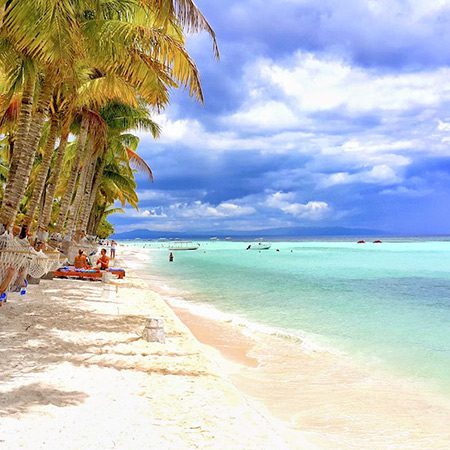
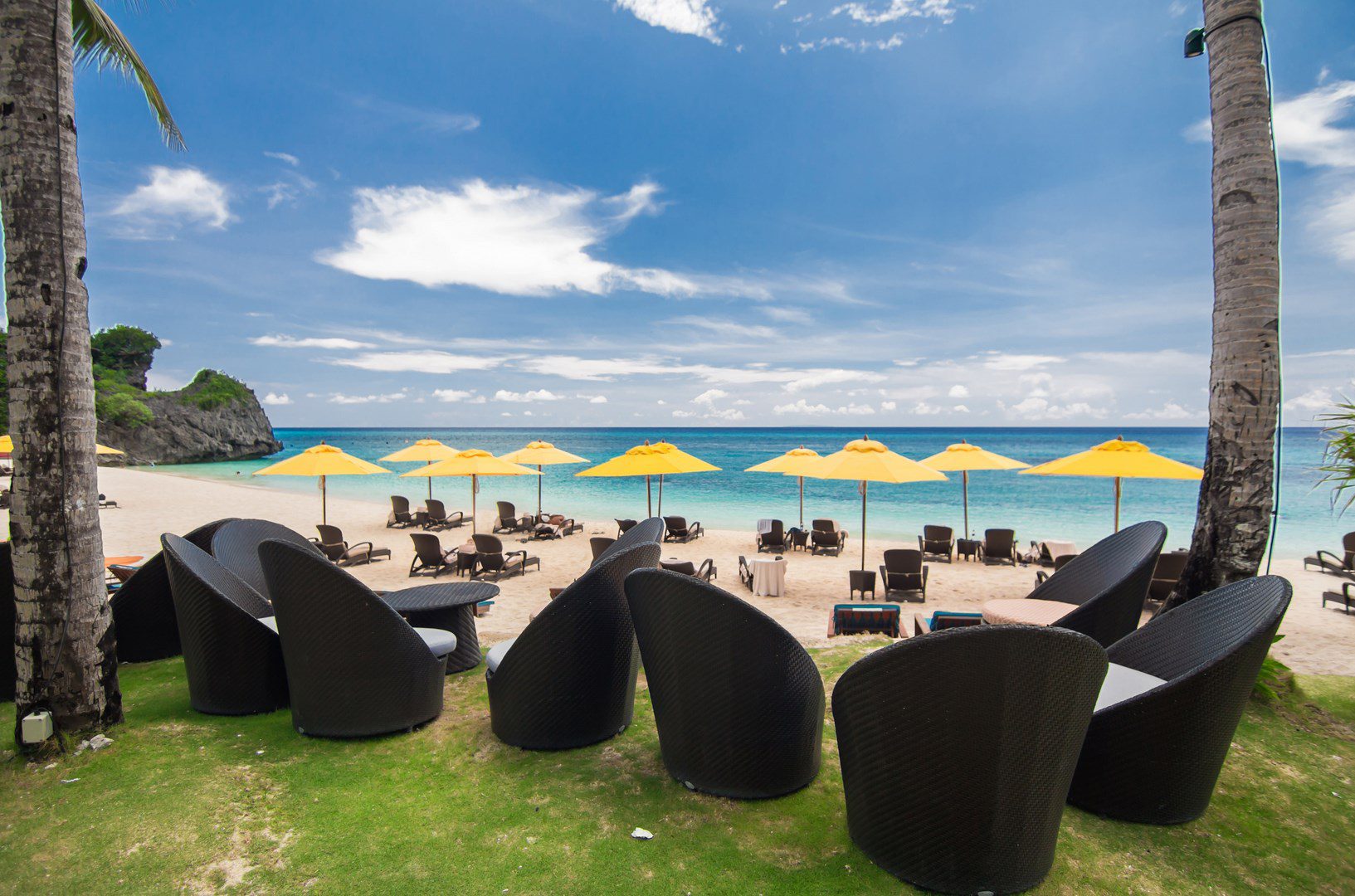
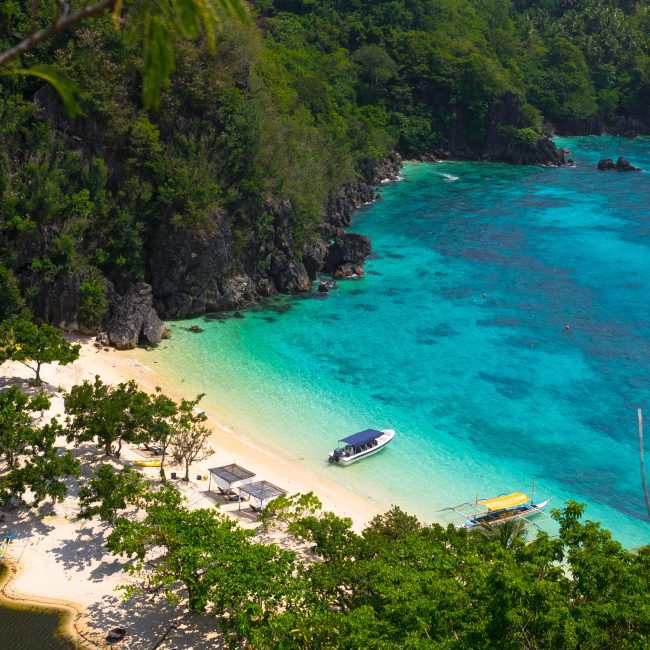
The island's main shoreline: soft pale sand, easy swimming in calm conditions, and a continuous walk between stations. Hotels, restaurants, and beach chairs line much of the strip. We design stays around which stretch matches your pace, not around "party island" as the default.
Station 1 (family / quieter luxury)
The wider, premium end of White Beach. Strong choice when you want space on the sand, higher-end resorts, and evening quiet without abandoning restaurant access. Discovery Shores and The Lind are classic Station 1 examples inside private packages.
Station 3 (calmer White Beach base)
Further along White Beach, generally quieter and less commercially dense than Station 2. A practical base for families and guests who want a relaxed beach day, walkable sand, and evenings that do not default to club volume.
Station 2 and D'Mall
The island's social centre: D'Mall lanes for shopping and casual meals, souvenir stalls, activity desks, and the densest cluster of bars, clubs, and late restaurants on White Beach. Come here when you want nightlife energy; pair it with a quieter hotel base if you still want soft mornings.
Nightlife, bars, clubs and restaurants
Station 2 and the White Beach strip come alive after sunset: beach bars on the sand, clubs and dance floors, live bands, fire dancers at some restaurants, and plenty of places to eat (Filipino, seafood, and international). D'Mall packs cafes, casual meals, and late options in open-air lanes. Celebration travellers can plan a proper night out; families usually sleep at Station 1 or 3 and visit the strip for dinner or a short evening, then head back when the volume rises.
Puka Beach (Yapak)
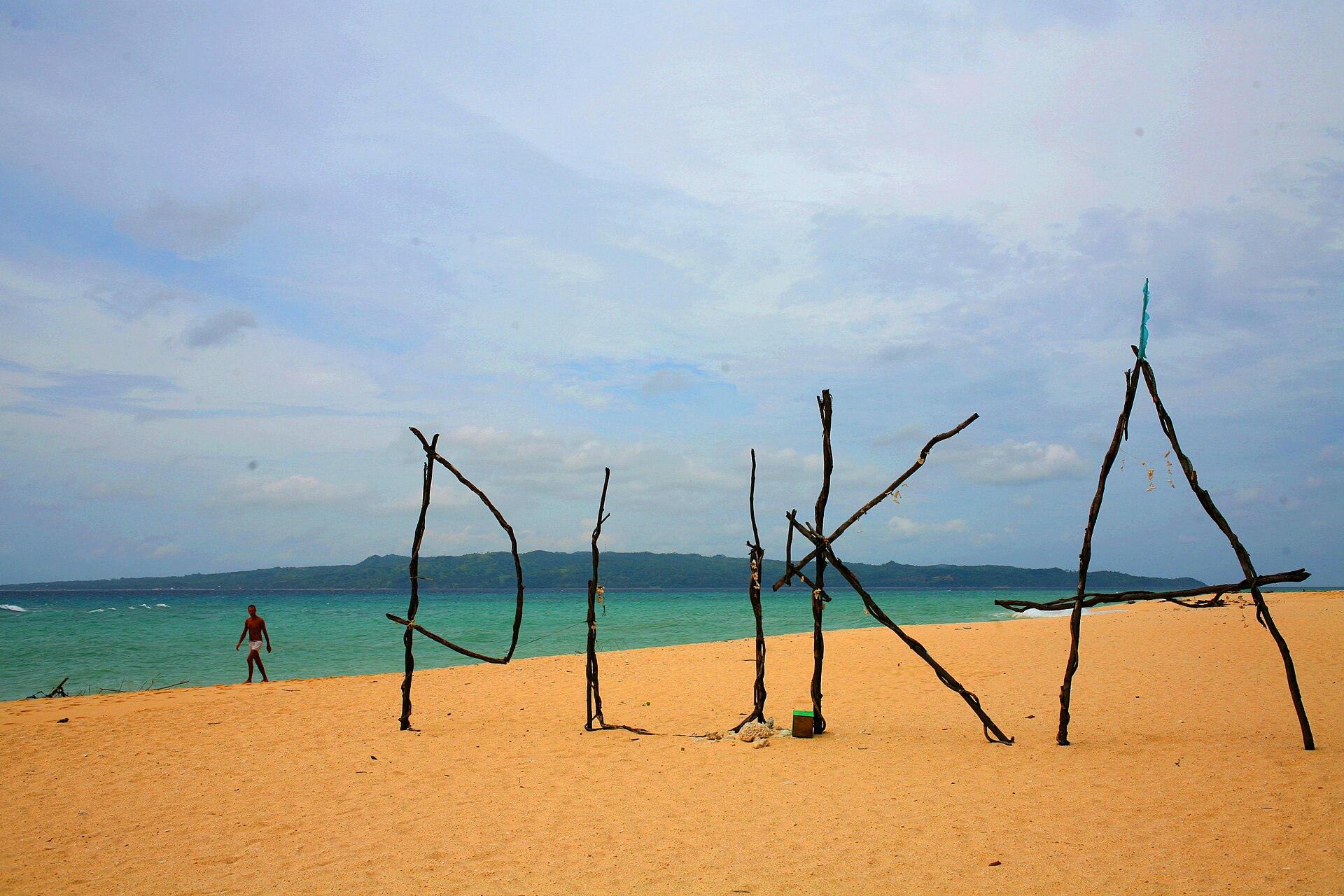
Northern beach with coarser, shell-heavy sand and a more open feel than central White Beach. About 800 metres of shoreline toward the island tip. Strong day out for swimming and photos away from Station 2 energy.
Bulabog Beach
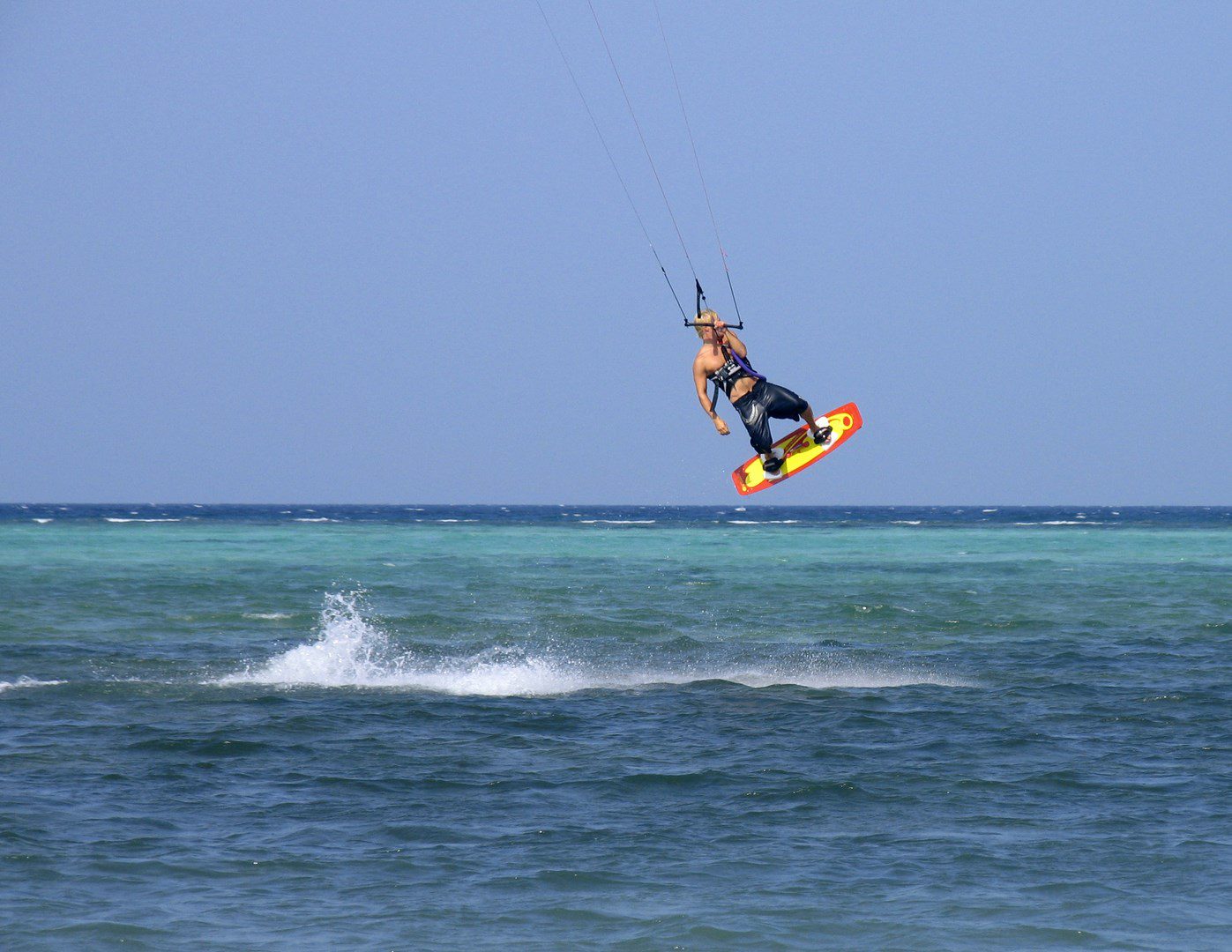
East-coast strip known for wind and water sports (kiteboarding, windsurfing) when conditions are right. Better for sport travellers than for a first family swim base.
Willy's Rock
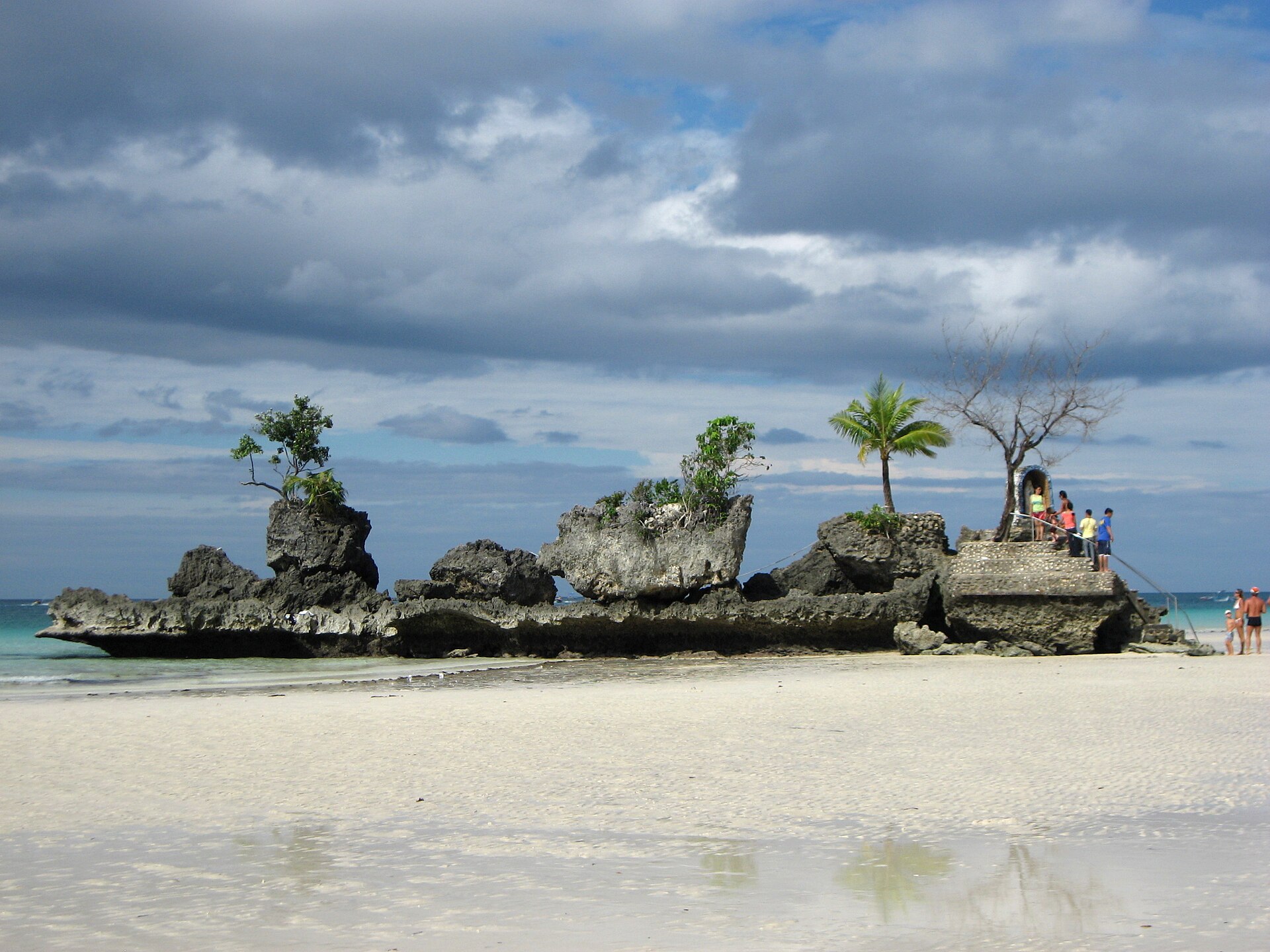
Landmark rock on White Beach with a Marian sculpture; popular sunset and photo stop. Brief visit, crowd-aware.
Mount Luho viewpoint
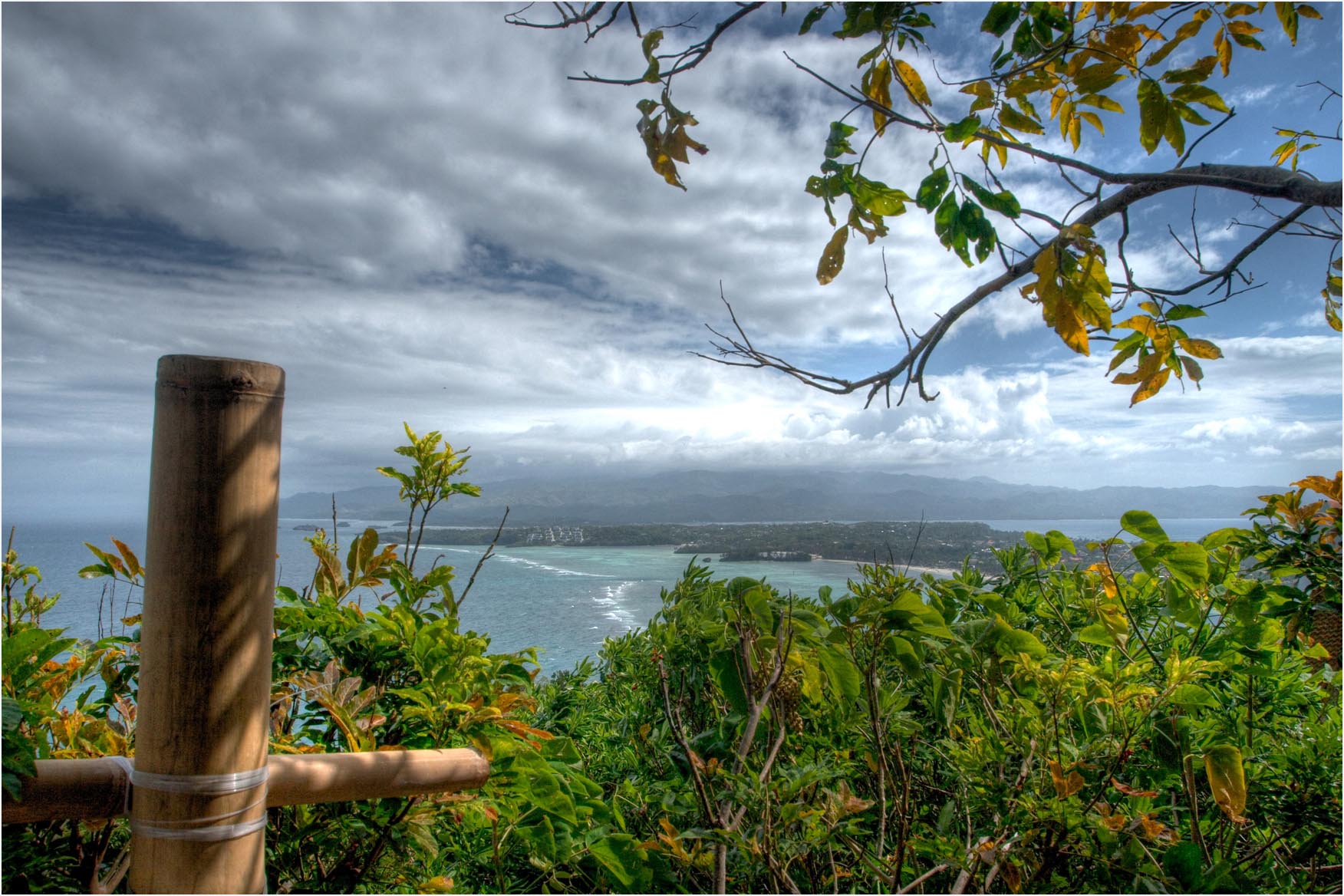
Highest commonly visited viewpoint on the island for a wide panorama. Often reached by tricycle or arranged vehicle. Soft land add-on when you want a break from flat beach time.
Island hopping / water activities
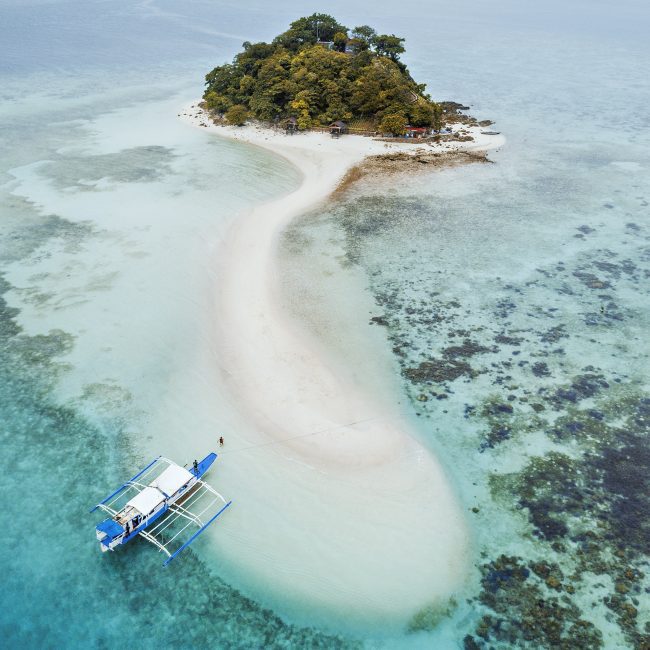
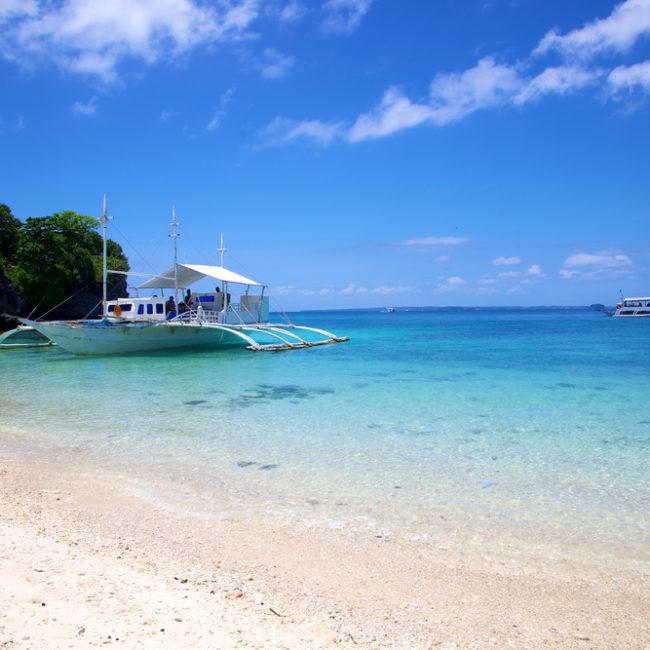
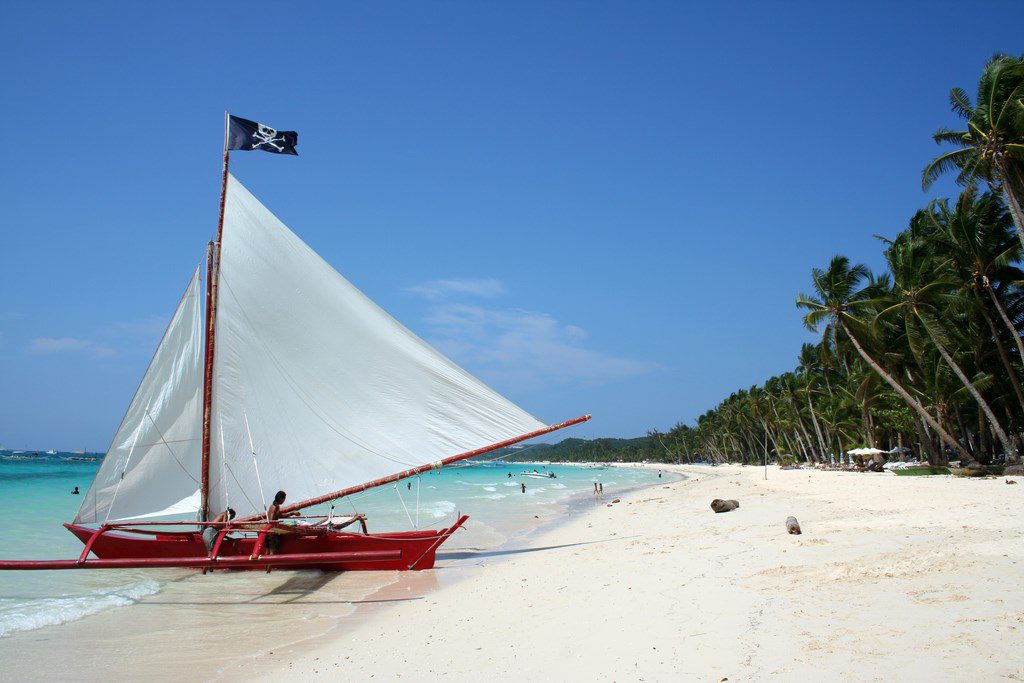
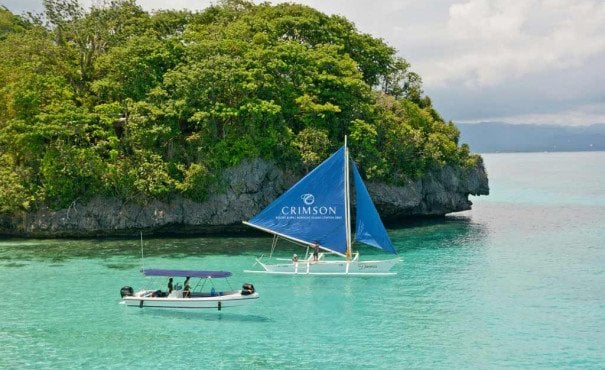
Private or group boat time for scenic shoreline, photo stops, and light snorkeling. Sunset sailing, kayaking, paddleboarding, and optional thrill rides (parasailing, banana boat, flyfish, helmet diving) through operators. Adrenaline is optional, with life jackets and suitability checks.
Access
Getting there
Air first · assisted land and boat chain · paced beach block.
- Fly Manila (or another Philippine hub) to Caticlan (MPH) or Kalibo (KLO).
- Land transfer to the boat pier (short from Caticlan; longer from Kalibo).
- Short boat crossing to Boracay.
- Transfer to your hotel area on White Beach or the northern resort pocket.
In a private package we arrange the meet-and-assist chain so families are not negotiating fares at the kerb. Island ground options include multicabs, vans, and arranged hotel pickups; we pick what fits luggage and ages.
Sample themes
Sample private package themes
Blurbs for private itineraries - hotels and activities as package components. Lead attaches live tour-item URLs at publish.
Family White Beach unwind
Station 1 or Station 3 hotel nights, private airport-boat chain, easy swim days, one Puka or viewpoint outing, and evenings that stay gentle unless you ask for Station 2.
Enquire for sample →Active beach week
White Beach base plus Bulabog wind-sport window (season-dependent), island hopping with snorkel stops, and optional sailing or dive add-ons for adults who want more water time.
Enquire for sample →Honeymoon / quiet celebration
Premium Station 1 or northern resort pocket, sunset sailing, private dinners, and Station 2 only if you want one night out. Pair with Manila gateway nights or El Nido / Coron before the beach finale.
Enquire for sample →Stay
Example hotels
Examples inside private packages only. Final options depend on dates, room type, and station vibe.
Discovery Shores (Station 1)
Beachfront Station 1 stay with a polished resort feel. Strong when families or couples want White Beach sand without living on the Station 2 strip.
The Lind (Station 1)
Contemporary Station 1 resort with a quieter beach pocket feel and easy walk access along White Beach. Suits guests who want calm evenings and service-led stays.
Shangri-La Boracay (northern resort area)
Larger luxury resort with its own beach setting away from the densest White Beach commercial lane. Often chosen for honeymoons and multi-generational trips that want space and facilities on site.
Henann Crystal Sands (White Beach)
Practical mid-to-upscale White Beach option when you want Henann-scale amenities and a straightforward sand base. Other Henann houses can appear in archive context or on request.
Crimson Resort & Spa Boracay (northern resort pocket)
Northern resort-area stay sharing the quieter resort beach context with neighbouring luxury properties. Sometimes described locally near "Station 0"; we locate it by resort area, not by inventing an official fourth White Beach station.
Hotels above are examples inside private packages, not sold alone on this page. No hotel-card enquire CTAs. We confirm the property against your dates as part of the full itinerary.
Gallery
Image gallery
Live TF library assets where high-res enough; remaining tiles labeled for licensed stock before publish.
How we work
How we run Boracay
We treat Boracay as a paced beach block: solid arrival day, swim and station orientation, one optional boat or viewpoint day, then buffer before the flight out. Private transfers mean we can hold a marine add-on when wind sits wrong on Bulabog, or move dinner to Station 1 when Station 2 feels too loud for the kids.
Sample itineraries often run Manila then Boracay, El Nido then Boracay, or Bohol then Boracay as the soft landing. Operating as a Philippines DMC since 2010, we keep hotels and activities inside the private package so the airport-boat-hotel chain and on-island pacing stay consistent. We do not name internal booking systems on this page.
Call +63-917-175-6678 · [email protected]
Partner recognition in Boracay includes the Coast Boracay Travel Partner Award for sales in 2018 and 2019. Full list: About Tourismo Filipino.
Answers
Frequently asked questions
How many days do I need in Boracay?
3-5 nights covers a classic private beach block: arrival buffer, White Beach time, one quieter outing (Puka or Mount Luho), and optional water activities. Divers, kiteboarders, or celebration trips may want longer.
What is the best time to visit Boracay?
November to May is generally more stable for beach and boat days. Outside that window, trips still run, but we build more weather flexibility into marine add-ons. Mid-March to May can feel busier and more expensive.
Caticlan or Kalibo: which airport should I use?
Caticlan (MPH) is closer and usually smoother for private arrivals. Kalibo (KLO) works when flights or fares fit better; allow roughly 1.5-2 hours road time to the pier before the boat. We confirm the full transfer plan with your flights.
Is Boracay good for families?
Yes, when you base at Station 1 or Station 3, keep adrenaline rides optional, and treat Station 2 as a visit rather than a hotel doorstep. Puka Beach is a strong quiet-sand day for mixed ages.
Station 1 vs Station 2 vs Station 3: where should we stay?
Station 1: wider beach, premium resorts, quieter luxury feel. Station 3: calmer White Beach base, often better value, less commercial density. Station 2: closest to D'Mall and nightlife; honest social hub, can be loud and crowded. Most family packages we design sleep at 1 or 3.
What is Puka Beach like compared with White Beach?
White Beach is the long, fine-sand, hotel-lined main strip. Puka (Yapak) is shorter, shellier sand, and usually quieter. Many guests day-trip to Puka and sleep on White Beach.
Do you sell hotels alone?
No. Hotels on this page are examples inside private packages (stays plus transfers and trip design). Enquire for a sample itinerary rather than a hotel-only checkout.
What water activities are available?
Swimming, snorkeling, diving, kayaking, paddleboarding, sunset sailing, and optional thrill rides (banana boat, flyfish, parasailing, helmet diving) through operators. Suitability, life jackets, and conditions matter; we do not push adrenaline products as mandatory.
Does Boracay have nightlife, clubs, bars and restaurants?
Yes. Station 2 is the main strip for beach bars, clubs, live music, fire-dance shows, and a wide restaurant mix (sand dining through louder celebration venues). D'Mall adds cafes and casual meals. You can plan full nights out, or sleep at Station 1 / Station 3 and visit only for dinner and a short evening. Quiet trips remain easy; nightlife is optional, not mandatory.
Can we combine Boracay with Manila, El Nido, or Bohol?
Yes. Common private shapes: Manila gateway nights then fly to Caticlan; El Nido or Coron first, then Boracay as the beach finale; or Visayas beach after Bohol/Cebu. We order islands around your flights and how many quiet beach nights you want.
What currency should we bring?
Philippine pesos for most day-to-day spend. Cards work at many resorts; ATMs and exchangers are easiest around D'Mall. Keep valuables secured in crowds.
How do we enquire?
Phone +63-917-175-6678 or email [email protected]. Tell us dates, who is travelling (including kids' ages), preferred station vibe, and whether Boracay is a finale or a stand-alone beach week.
Plan your stay
Plan your Boracay stay
Tell us dates, party size, and whether you want Station 1 / Station 3 calm or a mix with Station 2 evenings. We reply with a private sample itinerary (hotels as package components).
Continue
Selected Destinations
Eight peers from the SEO / audit set. Self-Boracay skipped (one Boracay card after merge on the hub).
Want to read more about Boracay?
Expanded archive from the previous Boracay island guide and the absorbed "Boracay Important Information" page. Cleaned for accuracy and tone; front cards above remain the short path. Historical price notes are dated planning background only, not current rates.
Destination essay (popularity, beaches, social life, restaurants, water sports)
Boracay has sat near the top of many Philippines beach itineraries for more than two decades: a compact island with a long White Beach shoreline, enough restaurants and bars to fill a week, and water sports that range from gentle kayaking to kiteboarding on the east coast. International visitors mix with domestic travellers; the island feels social without requiring every guest to chase a party.
That popularity is also why pacing matters. White Beach is developed and walkable. Hotels and restaurants line much of the sand. The quieter choices (Station 1's wider beach pocket, Station 3's calmer stretch, day trips to Puka) exist because central Station 2 can run loud and crowded. Private trips usually treat Boracay as a beach block with a clear base station, not as an unstructured "see every bar" week.
The Western Visayas setting (northwest of Panay) keeps access simple by Philippine standards: fly into Caticlan or Kalibo, cross by boat, and you are on sand the same day. Tropical weather is year-round; rain clusters more in the wetter months. Awards and "best island" lists appear in older marketing; we keep that as historical colour rather than a live slogan.
What guests typically plan for: swimming and beach time on White Beach; one quieter sand day (often Puka); optional island hopping or snorkeling; dinners that can be hotel-side or a planned Station 2 outing; and, for sport travellers, a Bulabog window when wind cooperates.
Accommodation price history (dated, non-binding)
Older versions of this guide quoted rough public room ranges in US dollars (for example, basic-to-mid rooms in a broad band that once sat near the tens to low hundreds of dollars per night, with named mid-range houses higher in peak weeks). Those figures were snapshots for budget conversation, not live offers.
For planning today: treat any dollar anecdote on legacy pages as historical context only. Tourismo Filipino does not publish hotel-only checkout prices on this destination page. Stays are confirmed inside a private package against your dates, room type, and season. Peak weeks (often around mid-March through May) and holidays cost more; June-October can open softer availability, with more weather buffer needed for boats.
If you are comparing value, decide first by station fit (quiet sand vs nightlife doorstep), then by resort scale, then by package inclusions (airport-boat chain, breakfast, activities). That order matters more than a screenshot of last year's rack rate.
Named mid-range and Henann-context anecdotes (cleaned)
Legacy copy named several mid-range and large-resort examples guests still ask about. Property details change; we retain the planning texture, not jokes or outdated room menus as promises.
Boracay Haven Resort (Station 2 context): A central Station 2 address with a wide menu of room categories in older listings (garden, deluxe, family suites, and similar). Useful historically as an example of sleeping close to D'Mall and the busiest strip. For quiet family trips we usually prefer Station 1 or 3 instead, and visit Station 2 for a meal.
Boracay Holiday Resort: Older notes described standard to suite inventory and apartment-style units with kitchenette for longer stays. Still a reminder that Boracay has more than five-star sand: mid-scale houses exist when packages need them.
Hey Jude Resort Hotel: Legacy value framing (simpler rooms, breakfast often included). Relevant as a "lighter budget inside a package" example, not as a public rate card.
Henann group context: Henann operates multiple Boracay properties (garden, lagoon, regency-style, Crystal Sands, Prime, and others over time). Large footprints mean pools, spas, and facilities that suit families who want resort amenities. The trade-off in older guest notes was scale: more rooms can mean a busier shared environment. Front cards list one Henann example (Crystal Sands); other Henann houses can be proposed on enquiry without turning the island into "Henann Island" humour.
None of these names are exclusive endorsements. Final package hotels depend on dates and the station quietness you want.
Station 1 hotel mini-biographies (illustrative)
Discovery Shores (Station 1): Long associated with beachfront Station 1 on White Beach. Modern tropical design, suites oriented to sand and water, and a guest mix that has included leisure travellers who want polish without leaving the main beach. In package design it reads as a Station 1 flagship when the brief is "quiet luxury on White Beach."
The Villa (Station 1 context, when available): Older guide copy described a multi-bedroom beach villa with pool, short walk to the water, and a private-house feel. Availability and branding shift; when a villa product fits dates, it remains a useful shape for multi-generational families who want space rather than a standard hotel corridor.
The Lind (Station 1): Contemporary luxury on a quieter pocket of White Beach sand, tree cover, and evening lighting that guests often call calm or romantic. Close enough to walk the beach toward busier stretches, far enough that nights can stay soft. Strong peer to Discovery when Station 1 is the brief.
These sketches are illustrative context for accordion readers, not a ranked awards list and not hotel-only sales copy.
Attractions and activities framework (land / marine / aerial)
Beyond lying on a towel, Boracay's add-ons group cleanly:
- Land: Mount Luho viewpoint; tricycle or buggy circuits; Willy's Rock photo stop; D'Mall browse; optional Zorb-style downhill rides when operating.
- Marine: Swimming and snorkeling; scuba for certified divers; kayak and paddleboard; banana boat and flyfish; helmet diving for non-swimmers who still want a supervised underwater look; sunset sailing.
- Aerial / height: Parasailing when conditions and operators allow.
Private packages usually pick one primary add-on day plus beach recovery, rather than stacking every thrill into 48 hours. Families often keep helmet diving and flyfish optional. Sport travellers may prioritise Bulabog wind windows over Station 2 nightlife.
Island hopping is scenic and social on Boracay. It is a short hop product with photo and snorkel stops, not a claim that Boracay outranks Palawan lagoons or Bohol reefs. We sell it as itself.
Banana boat, flyfish, and helmet diving (mechanics + safety tone)
Banana boat: An inflatable multi-rider tube towed by a speedboat. Riders hold on through turns and wake; falls into the water are common and part of the laugh. Life jackets are standard. Popular with families and friend groups who want a short adrenaline burst. Not ideal for anyone uncomfortable with sudden dunkings or who should avoid jarring motion.
Flyfish: A higher-adrenaline cousin of the banana ride: a towable inflatable that lifts and skims more aggressively. Best for guests who already enjoyed the banana boat and want more air time. Skip if you are uneasy with speed or impact.
Helmet diving: A supervised underwater walk using a supplied helmet air supply, aimed at guests who do not scuba and may not be strong swimmers. You stay upright on the seabed at shallow interpretive depths and look at fish and coral under guide oversight. Medical and comfort screening still matter; ear or sinus issues, pregnancy, and anxiety underwater are reasons to pass. This is an optional curiosity product, not a substitute for a proper dive course.
All three depend on licensed operators, weather, and local marine rules. We book them as opt-in lines inside a package after confirming ages and comfort.
Stations and White Beach scene-setting (longer texture)
White Beach overall: Roughly four kilometres of pale, fine sand on Boracay's west side. It is the island's signature shoreline: accessible, restaurant-lined in stretches, and busy in peak months. Local councils and tourism stakeholders have invested in keeping the beach usable after rehabilitation eras; guests still share space with boats outside swim zones. Snorkeling, kayaking, swimming, and jet-ski corridors coexist when rules are followed.
Station 1: Widest premium sand, higher-end resorts on or near the beach, and a quieter evening baseline than Station 2. Guests who "have money to spare" in older copy were really choosing space and service. Today we say the same thing without the snob frame: Station 1 fits private trips that want White Beach beauty with less commercial noise.
Station 2: Modern, dense, and useful. D'Mall is not one indoor mall building but a lattice of lanes with shops, cafes, restaurants, souvenir stalls, and activity suppliers. Cuisine ranges across Filipino and international menus; seafood is a staple, though "landed this morning" claims belong to marketers, not our fact sheet. At night the sand and bars can turn into an open social scene with music and crowds. Come for dinner or a celebration; sleep elsewhere if you need silence.
Station 3: Farther from the densest tourist knot, historically less developed, now with a mix of mid to upper-mid hotels. The sand often feels more open. Value can be strong. Absolute claims ("most pristine beach on the island") are unfair to other coves; the useful truth is simply quieter relative to Station 2.
Walking between stations on the sand is part of the pleasure when tides and boat lanes allow. Multicabs and arranged transfers cover road moves with luggage or kids.
Evolution note (from absorbed Important Information page): White Beach is no longer the quiet backpacker fringe some writers remember from decades ago. Hotels from simple guesthouses to luxury resorts, plus restaurants of every tier, fill the frontage. The sand and sunset still draw people; the commercial layer is the modern reality we plan around, not against.
Nightlife colour and related-island intent
Legacy slogans ("life is better in Boracay," endless revelry copy) read as brochure noise. The useful archive point is simpler: Boracay evenings span a real range.
On the lively end: Station 2 bars, live bands, dance floors, and fire-dance performances at some beach restaurants. Crowds thicken after dinner; valuables need the same care you would give any busy beach town.
On the quiet end: hotel lounges at Station 1 or 3, a nightcap on the sand, stargazing when skies are clear, and early nights with children. Fire dancers can still be watched as a short spectacle without joining a club crawl.
Related-island intent from the absorbed page pointed guests back to the main Boracay island URL and to wider Philippines trip ideas. After merge, that becomes internal links from this canonical page to Manila, El Nido, Bohol, and private multi-island samples, not a second indexable Boracay destination.
Access: plane first, ferry as caveat
Most private guests fly. Philippine Airlines, Cebu Pacific, and AirAsia are the operators guests hear most often into Caticlan or Kalibo; other carriers appear on thinner schedules. We confirm the current airline list at booking rather than treating any older brochure name as live.
Sea access via long ferry legs toward Caticlan (sometimes discussed with national nautical highway routing) remains possible for travellers who want the journey. We give neutral guidance: it is a long surface option (often in the ballpark of 17 hours), weather- and schedule-dependent, and usually a poor fit for short beach holidays or families with tight connections. Prefer air unless the guest expressly wants the ferry experience; verify current terminals, operators, and safety advisories at booking time.
Naming clarification
Boracay is the Philippine island. "Borah" is a casual mis-saying. Bora Bora is in French Polynesia. Similar sounds cause mix-ups in conversation; geography does not.
Willy's Rock and Mount Luho
Willy's Rock is the photogenic solitary rock on White Beach with a Marian image; sunset watchers collect here. Mount Luho is the readily sold viewpoint for island-wide panorama, typically by tricycle or arranged off-road style transfer. Both are short add-ons, not full-day heroes.
Fire dancers and nightlife range
Fire-dance shows are an evening option along parts of the beach and at some restaurants. Nightlife includes bands, clubs, and performances, or a quiet drink under the stars. We describe that range for an international English audience without leaning on foreign-city metaphors.